
Suddenly an Executor in Nova Scotia What Happens to the House
Suddenly an Executor in Nova Scotia: What Happens to the House (and When You Can Actually Sell It)
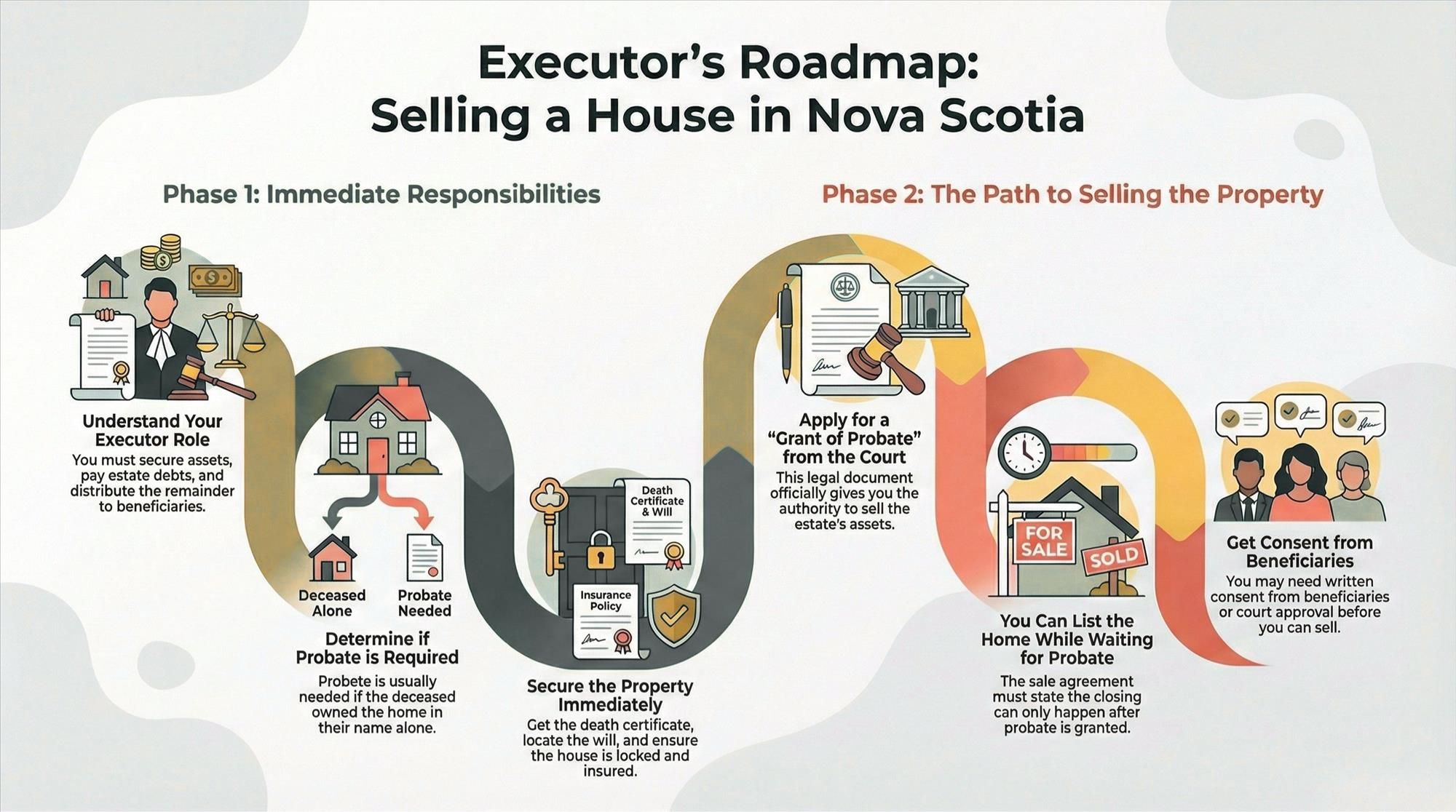
Finding out you're named as executor in someone's will, or being the family member everyone looks to when a loved one passes away, can feel overwhelming.
Along with grief and family responsibilities, you're suddenly facing legal terms like "probate" and "Grant of Administration," and you need to figure out what happens to the house.
If you're in this position right now, you're not alone. Many executors in Nova Scotia find themselves asking the same questions: Can I sell the house? Do I need permission from the court? What steps come first?
This guide walks you through the process step by step, focusing on what you need to know about dealing with real estate as an executor in Nova Scotia and how that fits into the current housing landscape as you plan your timeline.
I've Just Become an Executor. What Does That Mean for the House?
As executor (or administrator if there's no will), you're the person Nova Scotia law relies on to manage the deceased's estate. Your job is to:
- Gather and secure all assets, including real estate
- Pay any outstanding debts, taxes, and final expenses
- Distribute what remains to the beneficiaries according to the will (or intestacy rules if there's no will)
The house is often the largest and most complicated asset in an estate. Unlike bank accounts or personal belongings, you can't simply divide it or hand it over without following specific legal procedures.
Here's the key point: If the property was owned solely in the deceased's name, you'll almost always need a Grant of Probate (if there's a will) or Grant of Administration (if there isn't) before you can legally transfer or sell the home. This document proves to banks, the Land Registry, and potential buyers that you have the legal authority to act on behalf of the estate.
Do We Even Need Probate for This Property?
Not every property requires probate, but most do. Here's how to tell:
Sole ownership: If the deceased owned the home in their name alone, probate is required to sell it or transfer title. The Land Registry Office won't register a new deed without seeing the Grant of Probate or Administration.
Joint tenancy with right of survivorship: If the property was owned jointly (commonly with a spouse) as joint tenants with right of survivorship, it automatically passes to the surviving owner. It doesn't form part of the estate, so probate isn't needed for that specific property. The survivor can typically file a survivorship application directly with the Land Registry.
Tenants in common: If the deceased owned a share as a tenant in common, that share falls into the estate. You'll need probate to sell or transfer the deceased's portion, even if someone else owns the other share and continues living there.
A real estate lawyer can confirm how the property was held by reviewing the deed and advising whether probate is necessary for your situation.
The Legal Steps: From Death to Being Allowed to Sign a Purchase Agreement
Once you've confirmed probate is required, here's what the process typically looks like in Nova Scotia.
Immediate Tasks
Get the death certificate. You'll need certified copies for banks, insurance companies, and the probate application.
Locate the will. If there is one, it should name you as executor and may contain specific instructions about the property.
Secure and insure the home. As executor, you're responsible for protecting estate assets. Make sure the property is locked, winterized if needed, and that insurance is active and updated to reflect that the property is vacant or unoccupied.
If the property is in HRM, it also helps to be aware of what's happening in the Halifax–Dartmouth real estate market as you plan your next steps — prices, days on market, and seasonal timing all affect your strategy.
Applying to the Court
The executor files a probate application with the Nova Scotia Supreme Court (Probate Division). This includes:
- The original will (if one exists)
- An inventory of all estate assets, including the home's estimated value
- Payment of probate fees (calculated based on the estate's total value)
The court reviews the application to ensure everything is in order. If there are no issues, the court issues a Grant of Probate or Grant of Administration. This usually takes several weeks to a few months, depending on the complexity of the estate and court processing times.
Authority to Sell
Once you receive the Grant, you have the legal authority to:
- Sign listing agreements with a Realtor
- Accept offers to purchase
- Complete a sale transaction
- Sign documents to transfer title to the buyer
Before the Grant is issued, you don't technically have this authority, even if you're named in the will.
Can I List or Sell the Home Before Probate Is Finished?
Yes, you can list the property while probate is in progress, and many executors do exactly that. Waiting until after probate is complete to start marketing the home can mean months of lost time, particularly relevant given the seasonal patterns in the Halifax–Dartmouth market, where spring typically brings the strongest buyer activity.
Here's how it typically works:
Your lawyer and Realtor will include specific language in the Agreement of Purchase and Sale making it clear that:
- The sale is conditional on the executor receiving the Grant of Probate or Grant of Administration
- The closing date must occur after the Grant has been issued
This protects both you and the buyer. The buyer's lawyer won't allow the transaction to close without confirmation that you have legal authority to sell, and the Land Registry won't register the transfer without the Grant.
In practice: You can prepare the home, choose a Realtor, set a price, and start showing the property while your probate application is being processed. You can even accept an offer. The closing just needs to happen after the court issues the Grant.
Working with a Realtor experienced in estate sales is valuable here. They understand these timelines and can help set realistic expectations with buyers, negotiate appropriate conditional clauses, and coordinate with your lawyer on timing. You can learn more about what to look for in a selling partner on the Sellers' Info page.
Before choosing a list price, it's smart to review recent Halifax–Dartmouth sales data and price trends so you understand how your estate property fits into current market conditions.
Beneficiaries, Consent, and When the Court Has to Get Involved
Selling real estate as part of an estate isn't just about getting probate. Nova Scotia's Probate Act has specific rules about beneficiary involvement and court approval in certain situations.
Beneficiary consent: Under the Act, if you're selling the property for the purpose of distributing the proceeds to beneficiaries, you may need their written consent. The rules depend on whether the will gives you explicit authority to sell without consent, and whether all beneficiaries are adults who agree to the sale.
Court approval: The court may need to approve the sale if:
- There are minor beneficiaries (under 19)
- Beneficiaries disagree about selling
- The will doesn't clearly give you power to sell
- You're selling below market value or in unusual circumstances
Your lawyer's role: An experienced estate lawyer will review the will, identify which beneficiaries need to be notified or consulted, and advise whether court approval is required before you accept an offer.
Remember, selling the house is just one piece of your larger job as executor. You're also:
- Notifying all beneficiaries about the estate
- Advertising for creditors (required by law)
- Paying outstanding debts, taxes, and final expenses
- Distributing what remains according to the will
The sale of the home typically provides the funds to complete these other responsibilities, especially if the estate doesn't have significant liquid assets. If the estate includes a rental or investment property, keep in mind that OSFI's updated 2026 financing rules for investment properties may affect how some buyers qualify, which can influence the buyer pool and how you price the property.
Your Practical Checklist as an Executor with a House to Sell
Confirm ownership structure. Work with a lawyer to confirm how the home was owned, sole, joint tenancy, or tenants in common, and whether probate is required for this specific property.
Begin the probate application. Gather the will, death certificate, and asset inventory. File your application and pay probate fees as soon as reasonably possible.
Secure, insure, and maintain the property. Ensure the home is locked, winterized if necessary, and properly insured as a vacant or estate property. Continue paying utilities, property taxes, and any mortgage payments from estate funds. The Halifax economy remains strong, which supports property values while you work through the process.
Choose a Realtor familiar with estate sales. Look for someone experienced in handling probate timelines, conditional clauses, and realistic pricing for properties that may need work or have been vacant. A knowledgeable Realtor will help you navigate showings, marketing, and negotiations while probate is pending. You can use the home evaluation tool to get an initial read on current market value.
When pricing, it helps to look at the latest Halifax–Dartmouth market numbers and, if the property is in central Nova Scotia, the Truro, Bible Hill, and Stewiacke market data, so you understand how estate properties compare to broader conditions in those areas.
Coordinate with your lawyer on the sale agreement. Make sure the Agreement of Purchase and Sale includes appropriate language about probate, closing timelines, and any required consents or court approvals under the Probate Act.
Communicate with beneficiaries. Keep beneficiaries informed about the sale process, timelines, and how the proceeds will be distributed. Transparency reduces conflict and helps everyone understand what to expect.
Plan for closing after the Grant is issued. Work backward from your expected Grant date to set a realistic closing date that gives you time to finalize all legal requirements.
Frequently Asked Questions
How long does probate take in Nova Scotia? Probate typically takes 2 to 4 months from application to receiving the Grant, though it can be longer if the estate is complex or if there are issues with the application. Your lawyer can give you a more specific timeline based on your situation.
Can beneficiaries force me to sell the house? If the will directs you to sell, or if keeping the house isn't practical (for example, the estate needs funds to pay debts), beneficiaries generally can't prevent a reasonable sale. However, if beneficiaries disagree or the will is unclear, you may need court guidance.
What if there's a mortgage on the property? The estate is responsible for continuing mortgage payments until the property sells. Unpaid mortgage debt will be paid from the sale proceeds before beneficiaries receive their share. If the estate doesn't have funds to cover payments, contact the lender immediately, they may work with you on a short-term solution. For context on the current rate environment affecting mortgage holders in Nova Scotia, see the Bank of Canada rate decision overview. You can also run payment scenarios using the mortgage calculator.
Do I need to get the house appraised? For probate purposes, you'll need to estimate the property's value for the asset inventory. A professional appraisal isn't always required, but a Comparative Market Analysis from a Realtor can provide a solid, defensible value. An appraisal may be necessary if beneficiaries dispute the value or if the estate involves significant tax planning.
Can I live in the house while I'm executor? Only if the will specifically allows it or all beneficiaries agree. Otherwise, you need to treat the property as an estate asset and avoid personal use that could create a conflict of interest or deplete its value.
What happens if the house sells for less than expected? As executor, your duty is to obtain fair market value through reasonable efforts, listing with a qualified Realtor, marketing appropriately, and considering all reasonable offers. If you've done that and the market simply didn't support a higher price, beneficiaries generally can't hold you personally liable. Document your process and get your lawyer's advice if you're concerned. Reviewing the current market report can help you demonstrate that your pricing strategy was grounded in real data.
Moving Forward with Confidence
Being named executor comes with real responsibility, especially when real estate is involved. But with the right guidance, an experienced estate lawyer, a Realtor who understands probate timelines, and a clear understanding of the steps ahead, you can handle the sale professionally and fairly.
The process takes time, but it's manageable when you break it down into steps: confirm ownership, apply for probate, secure the property, list when you're ready, and close after the Grant is issued. The Halifax–Dartmouth market continues to show underlying strength, which can reassure executors worried about selling at the wrong moment.
If you're an executor dealing with a property in the Halifax Regional Municipality, East Hants, or Truro area and need guidance on pricing, timing, or navigating estate sales, I'm here to help.
Rob Lough Broker/Owner, Century 21 Optimum Realty 25 years of Nova Scotia real estate experience Contact me for a confidential consultation
Related Resources
- Halifax–Dartmouth Real Estate Market Statistics – January 2026
- Halifax Real Estate Market Stats – November 2025
- Truro Real Estate Market – October 2025
- OSFI's New Investment Property Mortgage Rules
- Halifax Economy 2025
- Buyers' Info – Complete Home Buying Guide
- Sellers' Info – Complete Home Selling Guide
- Free Home Evaluation
- Mortgage Calculator
If you're an executor dealing with a property in the Halifax Regional Municipality, East Hants, or Truro area and need guidance on pricing, timing, or navigating estate sales, I'm here to help.
Rob Lough Broker/Owner, Century 21 Optimum Realty 25 years of Nova Scotia real estate experience Contact me for a confidential consultation