
Halifax Real Estate Market Stats November 2025
Halifax Real Estate Market Stats November 2025: The Stats Show Seasonal Cooling in Strong Market
The Halifax-Dartmouth regional market wrapped up November 2025 with clear seasonal patterns emerging: strong spring momentum giving way to more balanced fall conditions. Here's what the latest data reveals for buyers, sellers, and investors tracking Nova Scotia's largest real estate market.
November 2025 Market Snapshot
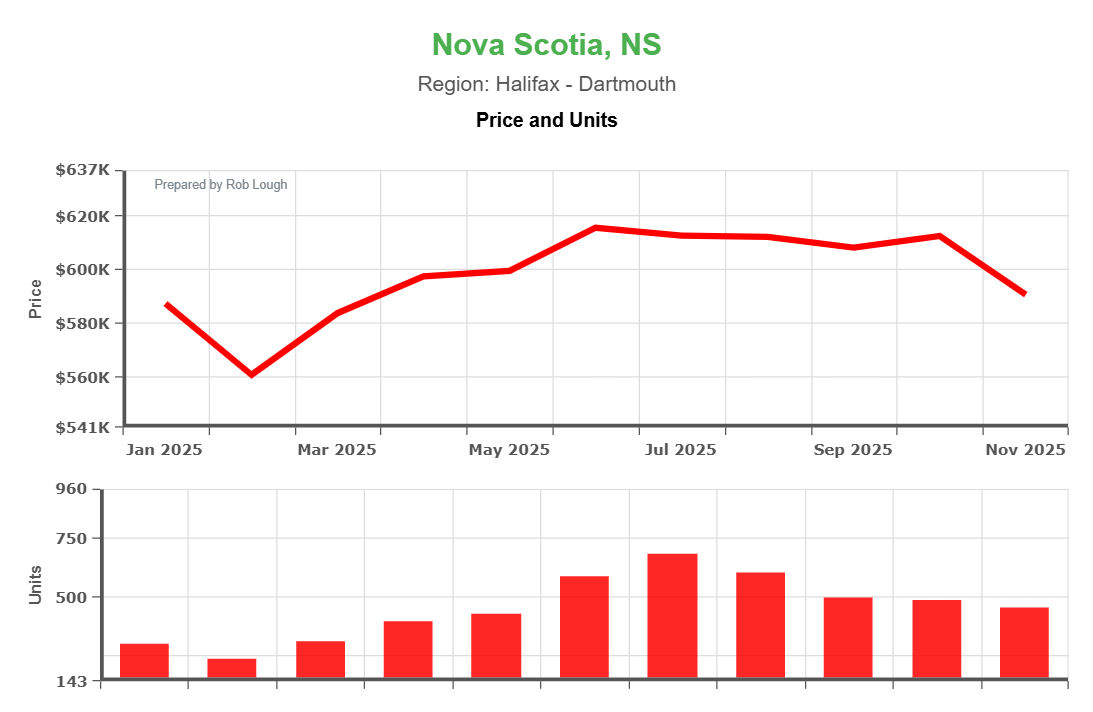
November sales activity in the Halifax Regional Municipality settled into the mid-400s for units sold, marking a notable cooldown from the summer peak but maintaining healthy transaction volumes. Average sale prices dipped just under $600,000, while total sales value landed in the mid-$200 million range.
The market dynamics shifted considerably from the heated conditions seen earlier in the year. Properties now spend an average of 40+ days on market, nearly double the late-July timeframe when homes moved in under 30 days. The sold-to-list price ratio has also eased below 99%, meaning buyers are successfully negotiating small discounts rather than facing the over-asking bidding wars common in spring and early summer.
The 2025 Market Cycle: Peak to Present
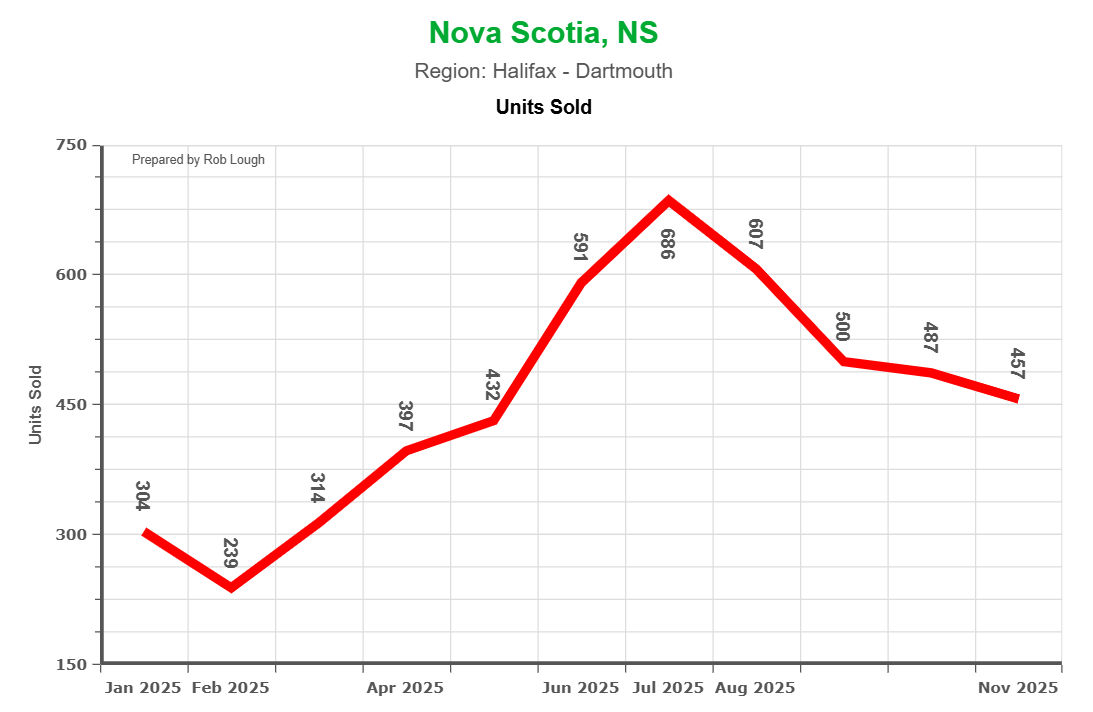
Halifax's real estate market followed a predictable but pronounced seasonal arc through 2025. Sales volumes climbed steadily from roughly 300 transactions in January to a summer peak approaching 680 units in July, more than doubling winter activity. As fall arrived, transaction counts retreated but remained well above the slower winter months.
HRM Average Sales Price November 2025
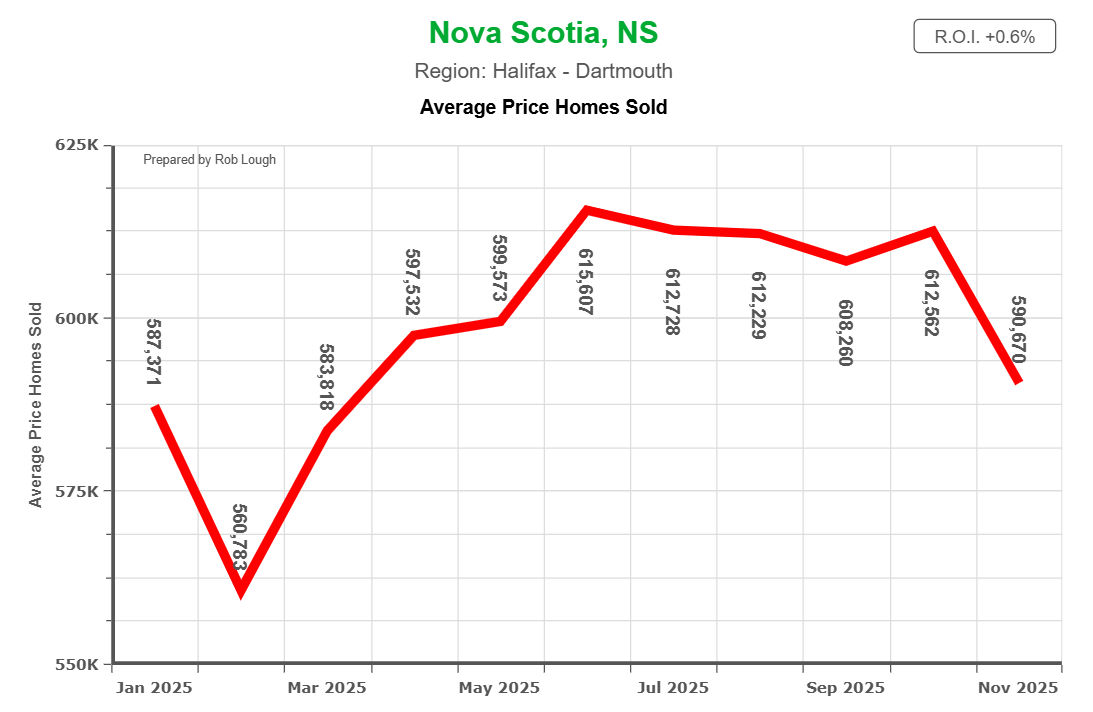
Average sale prices tracked a similar trajectory. Values rose from the high-$580,000s in January to the mid-$610,000 to $620,000 range during peak summer months, before settling back under $600,000 by November. Total sales value followed suit, climbing from under $200 million early in the year to over $420 million in July, then moderating to the mid-$200 millions by fall.
HRM Average Days on Market November 2025
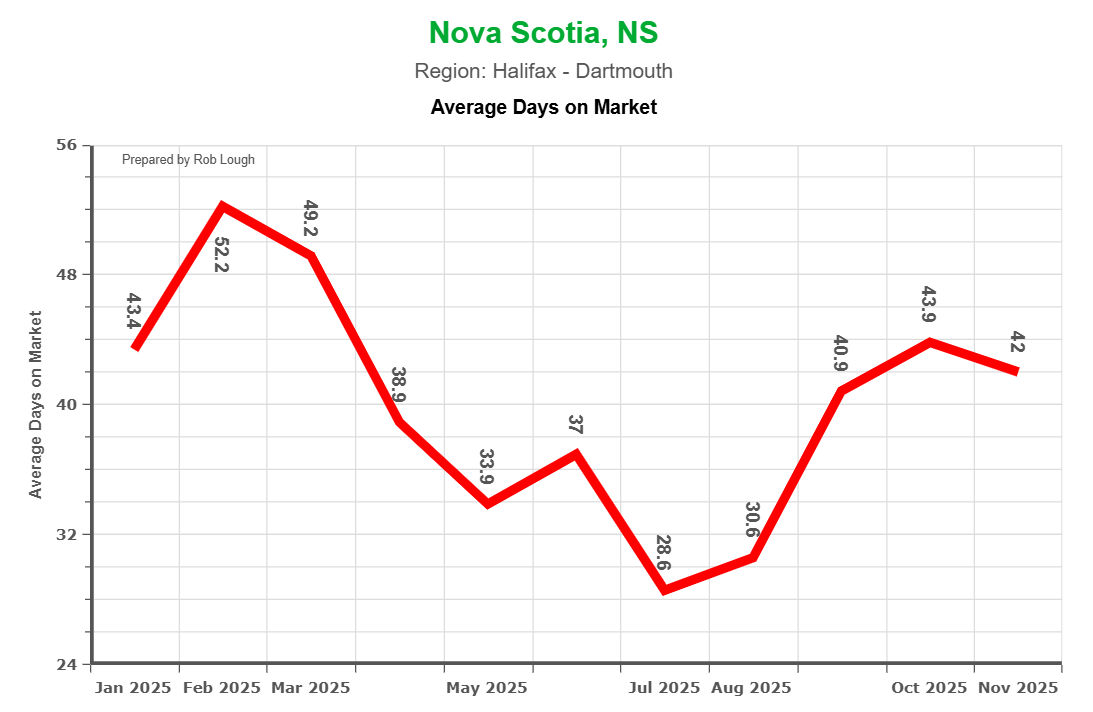 The speed of sales tells perhaps the most revealing story about market conditions. Days on market compressed from the low-40s in winter down to the high-20s by July, a clear seller's market with multiple offers driving quick closings. By October and November, that timeline had expanded back into the low-40s, giving buyers more breathing room to consider properties and negotiate terms.
What Sold-to-List Ratios Reveal About Negotiating Power
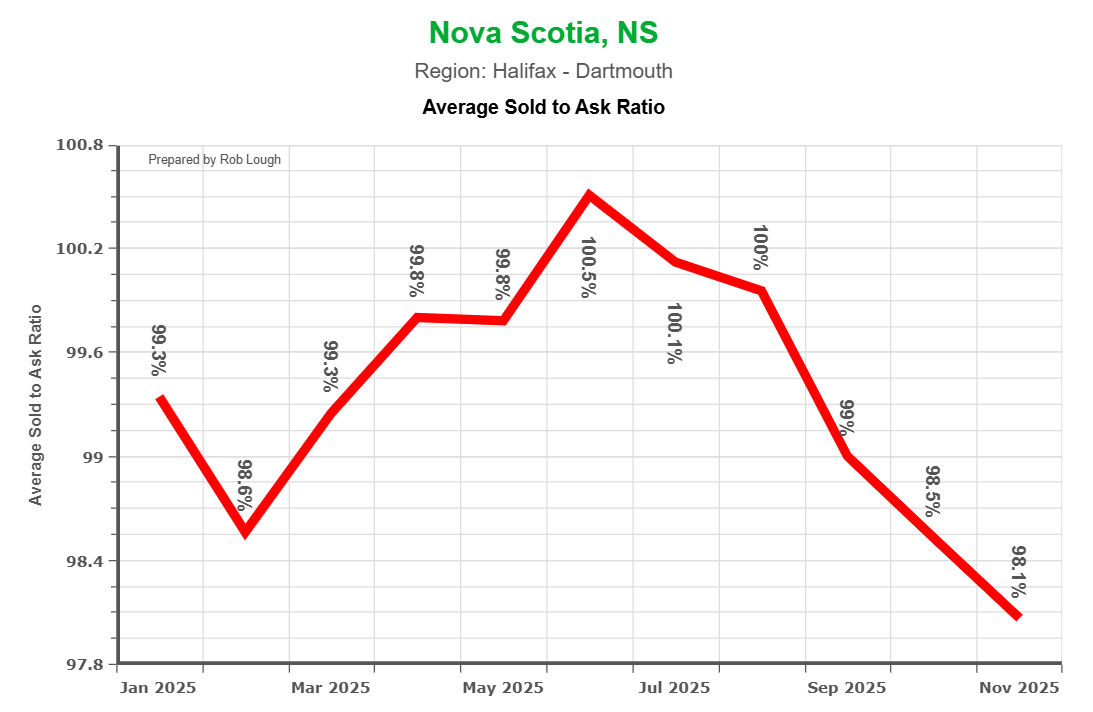 The relationship between list prices and final sale prices shifted meaningfully through the year. Winter transactions closed just under 100% of asking price, a relatively balanced starting point. By June, properties were selling at roughly 100.5% of list as competing buyers bid above asking to secure homes.
That premium evaporated as fall arrived. November's sub-99% ratio means the typical property sold for slightly less than the listing price, giving buyers modest but real negotiating leverage. This represents a significant change from the spring market, when sellers regularly fielded multiple offers and drove prices above their initial asking.
The 2025 Return on Investment Picture
Year-over-year data shows Halifax real estate delivered a modest positive return in 2025, with average prices up approximately 0.6% compared to 2024. While this represents appreciation rather than depreciation, it's a far cry from the double-digit gains seen in previous years.
This modest growth reflects a maturing market finding equilibrium after years of rapid price increases. For homeowners, it means stable equity rather than dramatic value spikes. For investors, it signals a return to fundamentals: rental income and long-term appreciation rather than short-term flipping opportunities.
Strategic Insights for Buyers
November buyers enjoyed the most favorable conditions of 2025. With properties sitting on market for 40+ days and selling below asking price, buyers had time to conduct thorough due diligence, arrange financing without pressure, and negotiate repairs or closing cost credits. The expanded inventory compared to summer also meant more choice across neighborhoods and property types.
First-time buyers in particular benefited from the fall slowdown. The combination of longer market times, price softness, and reduced competition created opportunities to enter the market without the frustration and overextension that characterized spring bidding wars. Properties that might have commanded premiums in July became negotiable by November.
Those planning to buy early in 2026 should expect conditions to tighten as spring approaches. Historical patterns suggest February and March mark the beginning of increased competition, with peak pressure building through May and June. Understanding how mortgage pre-approval strengthens your position becomes especially important as market competition increases.
Strategic Insights for Sellers
The data clearly identifies spring through mid-summer as the optimal selling window. Sellers who listed between April and July enjoyed the fastest sales, highest prices, and most frequent multiple-offer scenarios. Properties spent minimal time on market, and buyers regularly paid at or above asking price to secure homes.
November sellers faced a different reality: longer marketing periods, price negotiations, and the need for competitive pricing to attract serious buyers. Sellers who understood this seasonal shift and priced accordingly found success, while those expecting summer-level demand often faced extended market times or price reductions.
For those planning 2026 listings, the message is clear: prepare homes for market in winter and list by early spring to capture peak buyer demand. Waiting until late summer or fall means competing in a buyer-friendly environment where price and condition need to justify the listing, not just market momentum. Learning what increases home value in Nova Scotia can help sellers maximize their return.
Market Outlook: What the Numbers Suggest
Halifax remains fundamentally a seller's market by historical standards. Properties still sell, prices hold value, and transaction volumes indicate healthy demand. However, 2025 showed clear signs of market maturation and seasonal sensitivity.
The cooling from peak summer conditions reflects several factors: interest rate impacts on buyer budgets, increased inventory as more sellers listed, and natural seasonal patterns as families settled after summer moves. The modest year-over-year price appreciation suggests the market is finding sustainable footing rather than overheating.
Looking ahead, sellers should plan listing strategies around documented seasonal patterns, while buyers may find the best value and negotiating position in fall and winter months when competition eases. The fundamentals supporting Halifax real estate including strong employment, ongoing population growth, and limited housing supply relative to demand remain in place, even as month-to-month dynamics shift with the seasons. Understanding current mortgage rates and qualification criteria helps both buyers and sellers plan their transactions effectively.
About the Author