
Halifax-Dartmouth Real Estate Market Statistics 2025
Halifax-Dartmouth Real Estate Market Statistics 2025: Complete Year Analysis
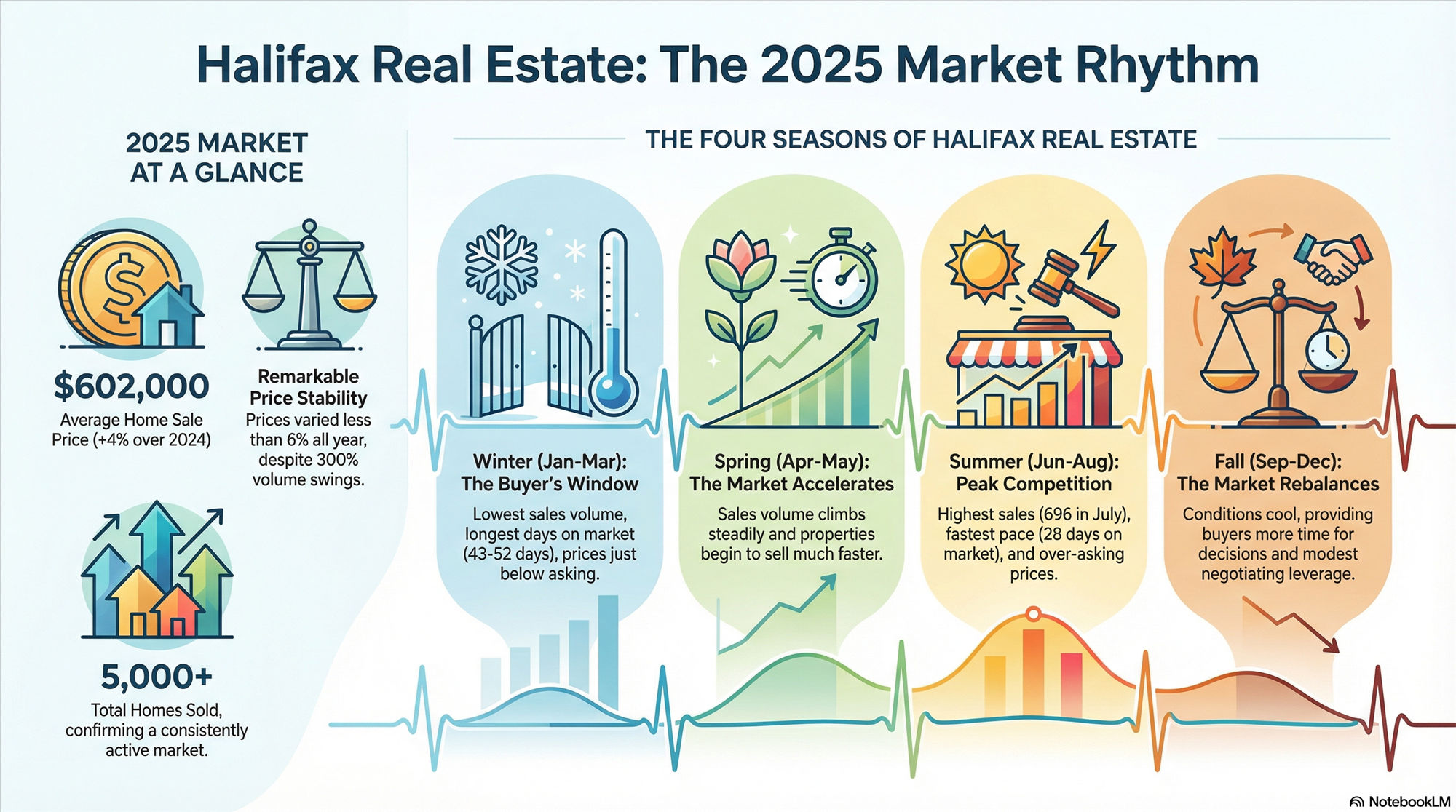
2025 Halifax-Dartmouth Market Overview
The Halifax-Dartmouth real estate market in 2025 demonstrated remarkable stability despite seasonal fluctuations. With average home prices hovering around $602,000 and strong spring-summer activity, the region maintained its position as one of Atlantic Canada's most dynamic housing markets. This comprehensive analysis breaks down every key metric from January through December 2025. Did you know, that we have live market updates for Halifax and Dartmouth?
Average Home Prices Throughout 2025
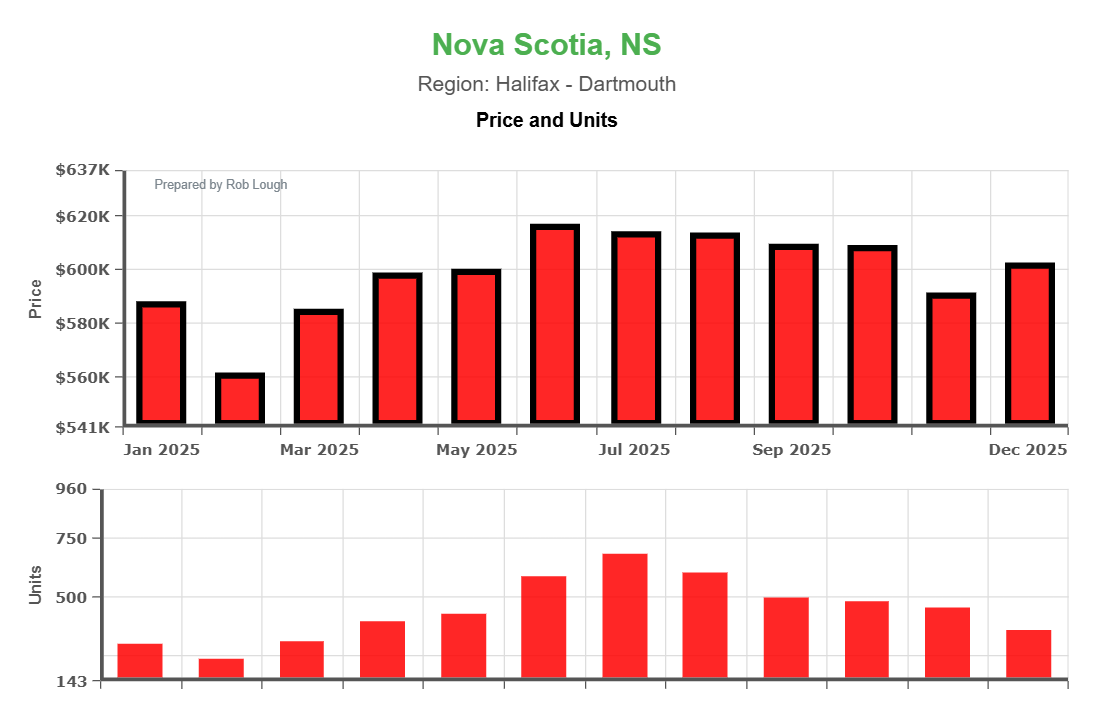
Home prices in the Halifax-Dartmouth region remained elevated and remarkably stable throughout 2025. The year began with average prices in the high-$580,000 range in January, climbing to peak levels of $614,607 during the competitive summer months, before settling back around $601,068 by year-end.
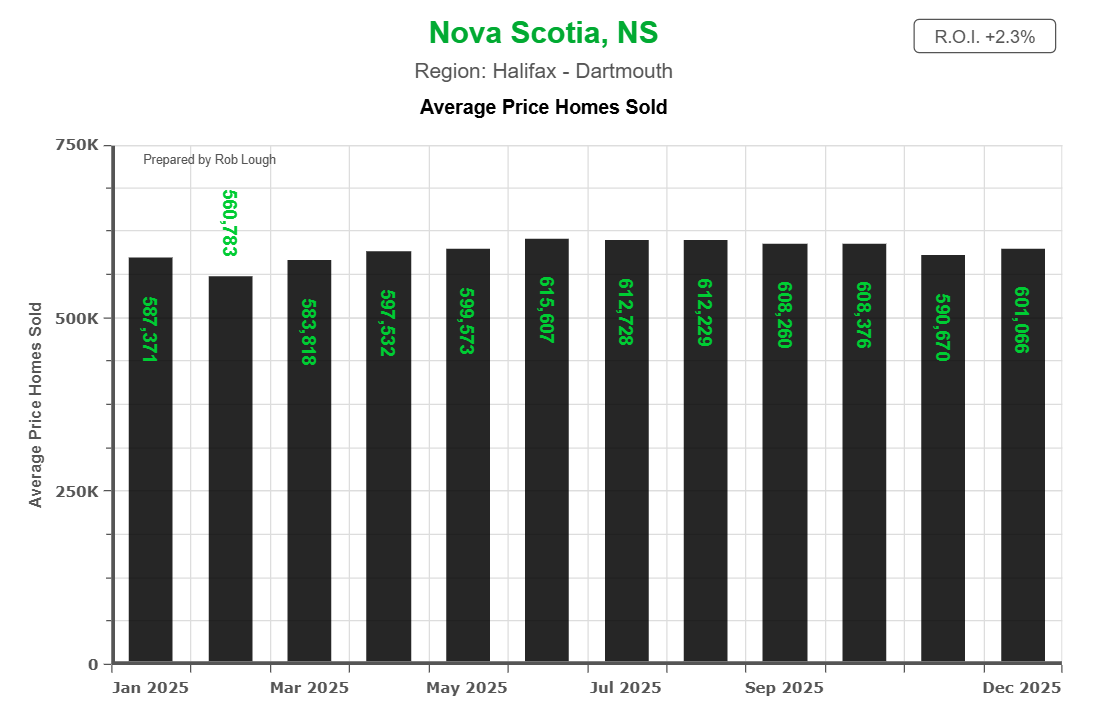
The year-to-date average sale price of approximately $602,000 represents roughly 4% growth compared to 2024 levels. This steady appreciation reflects continued demand in the region, supported by Halifax's growing economy and limited housing inventory. Unlike many Canadian markets that experienced volatility, Halifax-Dartmouth prices demonstrated month-to-month consistency even as transaction volumes fluctuated.
For buyers looking to understand mortgage pre-approval requirements, these price levels mean typical down payments range from $30,000 for first-time buyers to $120,000+ for those requiring conventional financing.
Sales Volume and Transaction Values
Transaction activity in 2025 followed predictable seasonal patterns, with notable peaks and valleys throughout the year. Unit sales began modestly in the winter months, with January recording 304 sales and February dipping to just 239 units—the year's lowest volume.
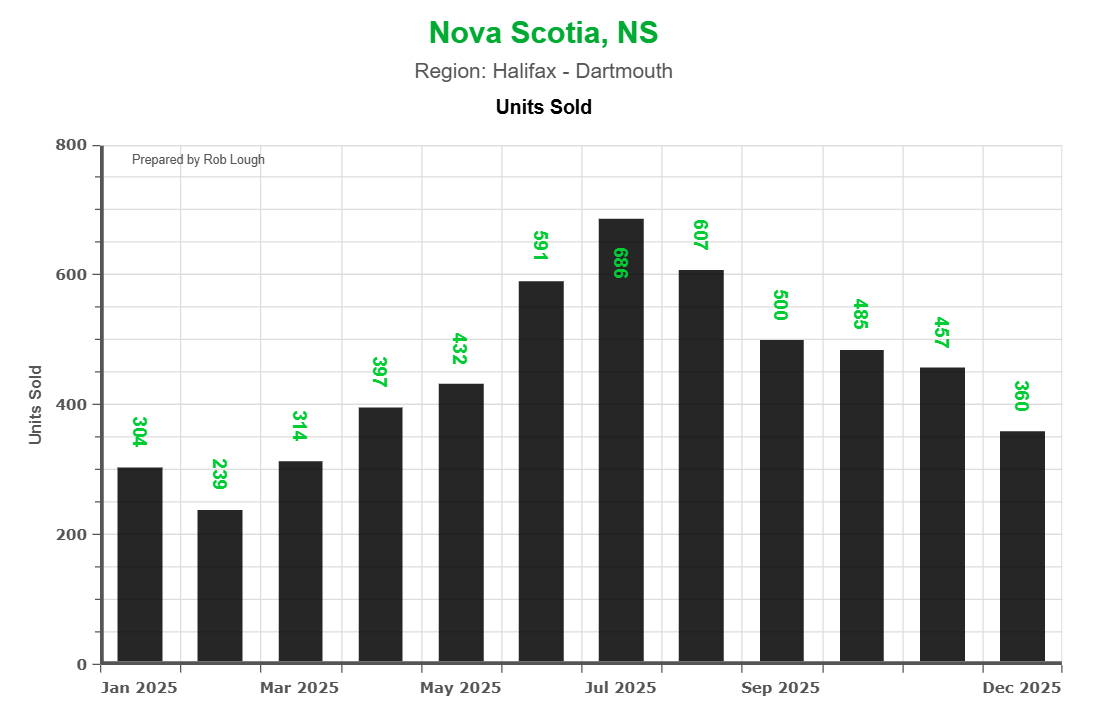
Spring brought renewed momentum, with sales climbing from 314 units in March to 397 in April and 432 in May. The market reached its zenith during summer, with June recording 591 sales and July hitting the year's peak at 696 transactions. August maintained strong momentum with 607 sales before the traditional fall slowdown began.
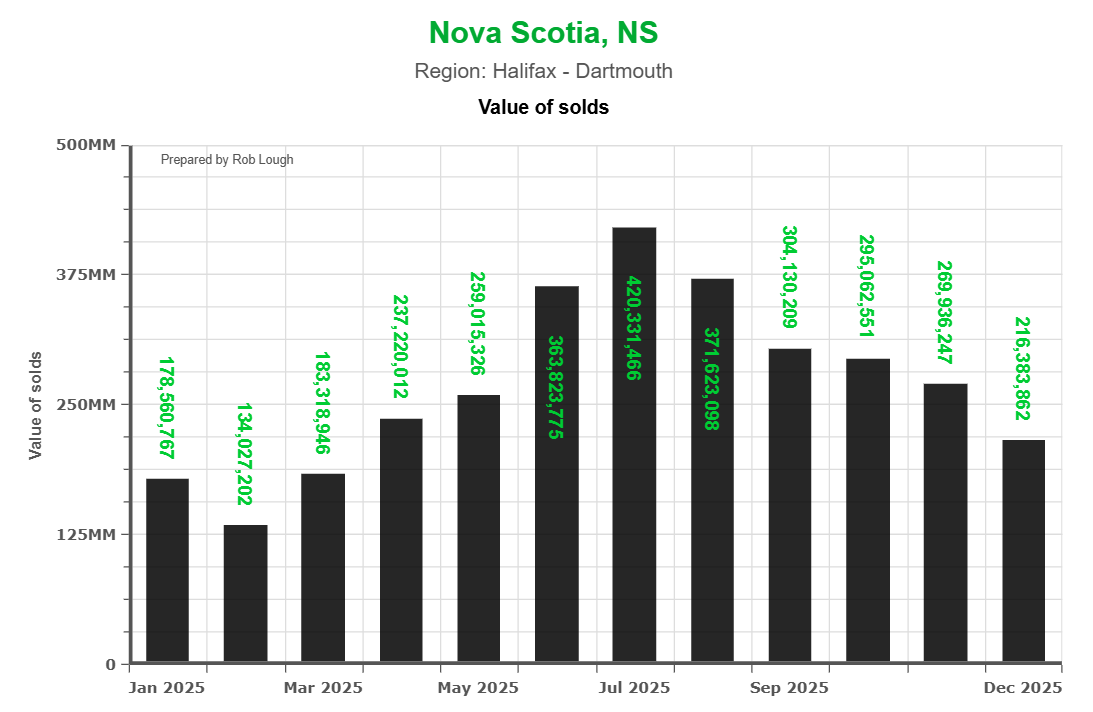
The total value of sales mirrored this pattern, reaching approximately $420.3 million in July—the highest monthly dollar volume of the year. Even during the slower winter months, total sales values remained substantial, with December closing at $216.4 million despite reduced transaction counts. This concentration of dollar volume during spring and summer months is typical for the Halifax real estate market and reflects buyer preferences for moving during warmer weather.
Days on Market: Speed of Sales
Average days on market proved to be one of 2025's most revealing metrics, clearly illustrating the market's seasonal rhythm. Properties that hit the market during winter months spent an average of 43-52 days before selling, reflecting typical seasonal slowdown and buyer caution.
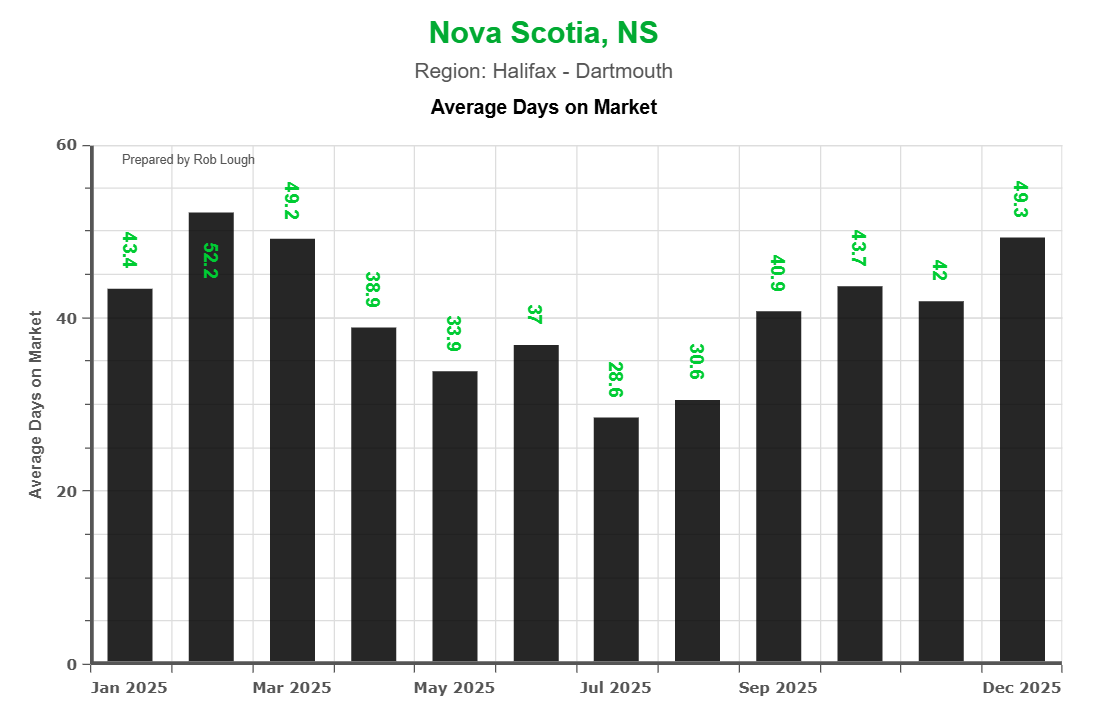
As spring arrived, absorption rates accelerated dramatically. By May, average DOM had dropped to 33.9 days, falling further to just 28.6 days in July—the year's fastest pace. This rapid absorption during peak season created intense competition among buyers and contributed to the over-asking sales environment that characterized mid-2025.
Fall brought more balanced conditions, with DOM climbing back to 40.9 days by September and reaching 49.3 days by December. These extended marketing periods gave buyers more time for home inspections and due diligence, creating a more measured transaction environment compared to the summer frenzy.
Sold-to-Ask Ratios: Pricing Dynamics
The sold-to-ask ratio throughout 2025 tells a compelling story about negotiating power and market conditions. Winter and early spring saw ratios hovering just under 100%, with January at 99.3% and February at 98.5%, indicating that most properties sold slightly below asking price.
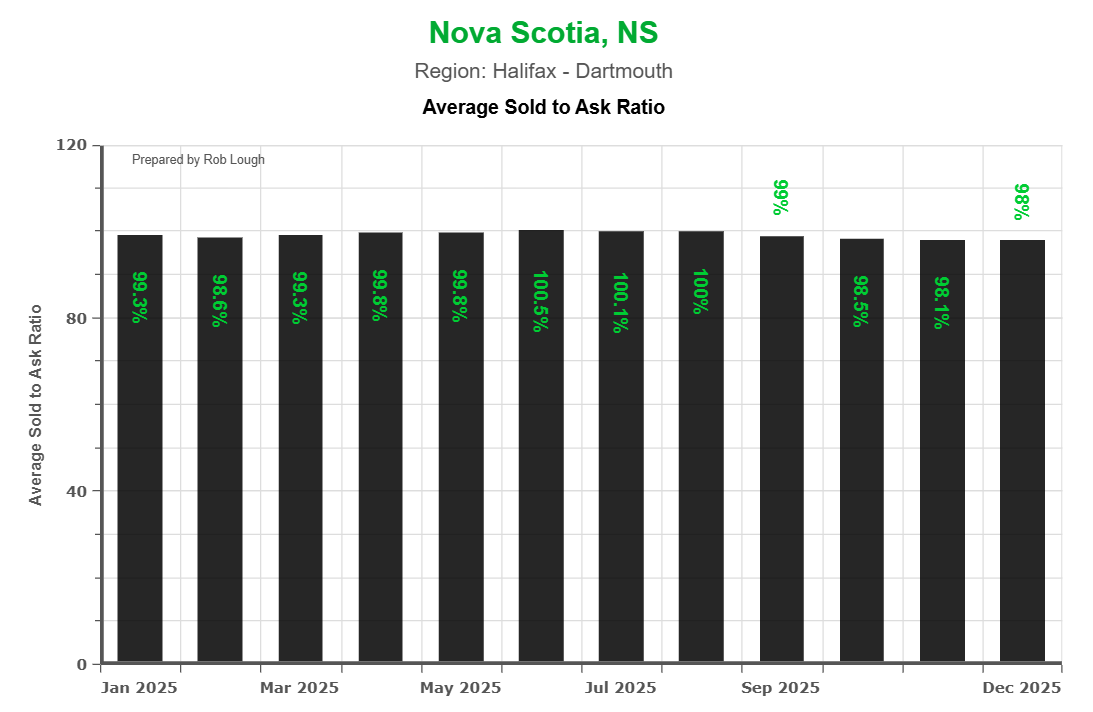
As market momentum built, sold-to-ask ratios climbed to 100% or higher from May through August, with June and July both recording 100.1%. This meant buyers were consistently meeting or exceeding list prices during peak competition—often submitting multiple offers on desirable properties.
By fall, ratios had moderated back to the 98-99% range, with September at 99%, October at 98.5%, and December at 99%. While this represented a cooling from summer peaks, these ratios still indicated strong pricing power for sellers compared to more buyer-favorable markets elsewhere in Canada. Sellers working with experienced listing agents continued to achieve near-asking prices even during traditionally slower months.
Seasonal Patterns and Market Timing
The 2025 data reinforces long-established seasonal patterns in Halifax-Dartmouth real estate. Winter months (January-March) consistently showed lower volumes, longer marketing times, and slight below-asking sales—advantageous conditions for buyers with flexibility to purchase during off-peak periods.
Spring emergence (April-May) brought accelerating activity as inventory increased and buyers returned to active searching. This transitional period often offers a sweet spot for both buyers and sellers, with improving conditions but not yet peak competition.
Summer dominance (June-August) clearly established itself as the year's most active and competitive period. Buyers shopping during these months faced the stiffest competition, fastest sales, and highest likelihood of bidding wars. However, they also benefited from maximum inventory selection and favorable weather for property viewings.
Fall stabilization (September-November) and winter softening (December) brought more balanced conditions, with buyers gaining modest negotiating leverage as urgency decreased and inventory lingered longer. For purchasers considering first-time buyer programs, these months often provided more opportunity for careful decision-making.
Price Stability Despite Volume Fluctuations
One of 2025's most remarkable characteristics was price stability despite significant swings in transaction volume. While monthly sales fluctuated by nearly 300%, from 239 units in February to 696 in July, average prices varied by less than 6% across the entire year.
This price resilience suggests fundamental market strength driven by sustained demand, limited supply, and Halifax's continued economic growth. Unlike markets experiencing price volatility, Halifax-Dartmouth demonstrated that reduced volume doesn't automatically translate to price corrections when underlying demand remains solid.
For real estate investors exploring investment properties in Halifax, this stability provides confidence in long-term value appreciation and reduces concerns about timing the market perfectly.
Comparative Context: 2025 vs. Previous Years
The approximate 4% year-over-year price growth from 2024 to 2025 represents healthy but moderate appreciation. This stands in contrast to the double-digit annual gains seen during the 2020-2022 pandemic boom, suggesting the market has transitioned to more sustainable growth patterns.
Transaction volumes in 2025 remained robust by historical standards, though not matching the frenzied pace of peak pandemic years. The 5,000+ total sales across the region confirm Halifax-Dartmouth's position as a consistently active market that attracts both local and out-of-province buyers seeking relocation opportunities.
What Buyers Should Know
Buyers entering the Halifax-Dartmouth market should understand several key dynamics:
First, timing matters significantly. Those with flexibility to purchase during fall or winter months will encounter less competition, slightly better pricing leverage, and more time for thoughtful decision-making. Buyers committed to summer purchases should expect to act quickly, submit competitive offers, and potentially waive conditions to secure desirable properties.
Second, the near-100% sold-to-ask ratios throughout most of 2025 mean that lowball offers rarely succeed in this market. Properties priced appropriately for their condition and location typically sell at or near asking price, regardless of season. Buyers should work with knowledgeable agents who understand comparable market analysis to submit realistic offers.
Third, the 30-50 day average marketing time provides guidance for purchase timelines. Buyers should begin their search 60-90 days before their desired possession date to account for property search time, offer negotiations, and typical 30-60 day closing periods.
Finally, in a market averaging $602,000, buyers should secure mortgage pre-approval early in their search to understand their true budget and strengthen their negotiating position when submitting offers.
What Sellers Should Know
Sellers can leverage several insights from the 2025 data:
Timing your listing for the spring-summer window (April-August) maximizes your chances of achieving asking price or better, minimizing days on market, and receiving multiple offers. Properties listed during this peak period sold an average of 15-20 days faster than winter listings and were more likely to exceed asking price.
However, fall and winter listings aren't without advantages. Reduced competition from other sellers means your property receives more focused attention from active buyers. While you may accept slightly below asking price, you'll deal with serious, motivated purchasers rather than casual browsers.
Pricing strategy matters regardless of season. The data shows that appropriately priced properties sold consistently throughout 2025, while overpriced listings languished even during peak months. Working with experienced local realtors to set competitive pricing based on recent comparables remains the foundation of successful sales.
Property preparation deserves investment regardless of market conditions. In a region where average prices exceed $600,000, buyers expect move-in ready condition. Addressing deferred maintenance, completing minor renovations, and professional staging can justify premium pricing and accelerate sales even during slower months.
Regional Variations Within Halifax-Dartmouth
While these statistics represent the broader Halifax-Dartmouth region, individual neighborhoods showed varied performance throughout 2025. Urban core areas like Halifax Peninsula and downtown Dartmouth typically experienced faster sales and higher sold-to-ask ratios than suburban communities.
Emerging neighborhoods and areas undergoing revitalization, such as properties near Shannon Park development, attracted strong buyer interest due to perceived value and future appreciation potential. Established suburban communities offered more inventory and slightly longer marketing times but maintained stable pricing.
Waterfront properties, regardless of specific location, commanded premium pricing and sold quickly throughout the year, with many receiving multiple offers even during traditionally slower months. The region's coastal lifestyle appeal continues to drive demand for water-view and water-access properties.
Looking Ahead: Market Outlook
The 2025 Halifax-Dartmouth market data suggests a mature, stable real estate environment that has transitioned from the volatility of pandemic-era boom years to more predictable, sustainable patterns. The combination of steady pricing, seasonal volume fluctuations, and balanced sold-to-ask ratios indicates neither an overheated market at risk of correction nor a soft market signaling decline.
Several factors support continued stability heading into 2026. Halifax's diversified economy, growing population through both interprovincial and international migration, and limited housing supply relative to demand create fundamental support for pricing. Changes to mortgage regulations may influence buyer qualification but are unlikely to dramatically shift overall market dynamics.
The seasonal patterns demonstrated throughout 2025 will likely persist, with spring-summer peaks and fall-winter moderation remaining the norm. Buyers and sellers who understand these rhythms and plan their transactions accordingly will continue to achieve the best outcomes.
Conclusion: A Strong, Stable Market
The 2025 Halifax-Dartmouth real estate market delivered exactly what most participants hope for: stability, predictability, and healthy appreciation without excessive volatility. Average prices around $602,000 represent fair market value supported by strong demand, while seasonal volume fluctuations provided opportunities for both aggressive spring-summer transactions and more measured fall-winter decision-making.
Whether buying your first home, selling to upsize or downsize, or investing in rental properties, the Halifax-Dartmouth market offers a balanced environment where informed participants can achieve their goals. The key lies in understanding market rhythms, working with experienced professionals, and aligning your timeline with market conditions that favor your specific objectives.
For personalized guidance navigating the Halifax-Dartmouth real estate market, contact Rob Lough at Century 21 Optimum Realty to discuss your specific situation and goals.
Article prepared by Rob Lough, Broker/Owner at Century 21 Optimum Realty. With over two decades of experience serving Halifax, Dartmouth, and surrounding communities, Rob provides expert guidance for buyers, sellers, and investors throughout the region.