
Egress Window Requirements for Bedrooms in Nova Scotia
When it comes to bedroom safety in Nova Scotia, egress windows aren't just a building code formality—they're a critical lifeline in emergency situations. Whether you're renovating a basement, converting a room into a bedroom, or purchasing a home, understanding the province's egress window requirements can protect your family, preserve your insurance coverage, and ensure legal compliance.
What Are Egress Windows and Why Do They Matter?
Egress windows serve as emergency escape routes when primary exits become blocked during fires or other emergencies. In Nova Scotia, specific regulations govern these windows to ensure occupants can safely exit bedrooms without assistance. With updated standards that took effect on April 1, 2025, homeowners and contractors must meet stricter requirements for all new installations and renovations.
Beyond safety, proper egress windows affect home insurance eligibility, property values, and the legal definition of what constitutes a bedroom. Non-compliant windows can result in denied insurance claims, difficulties selling your home, or restrictions on how you can use certain spaces.
Nova Scotia Egress Window Size Requirements
The provincial building code establishes clear minimum dimensions for egress windows serving bedrooms:
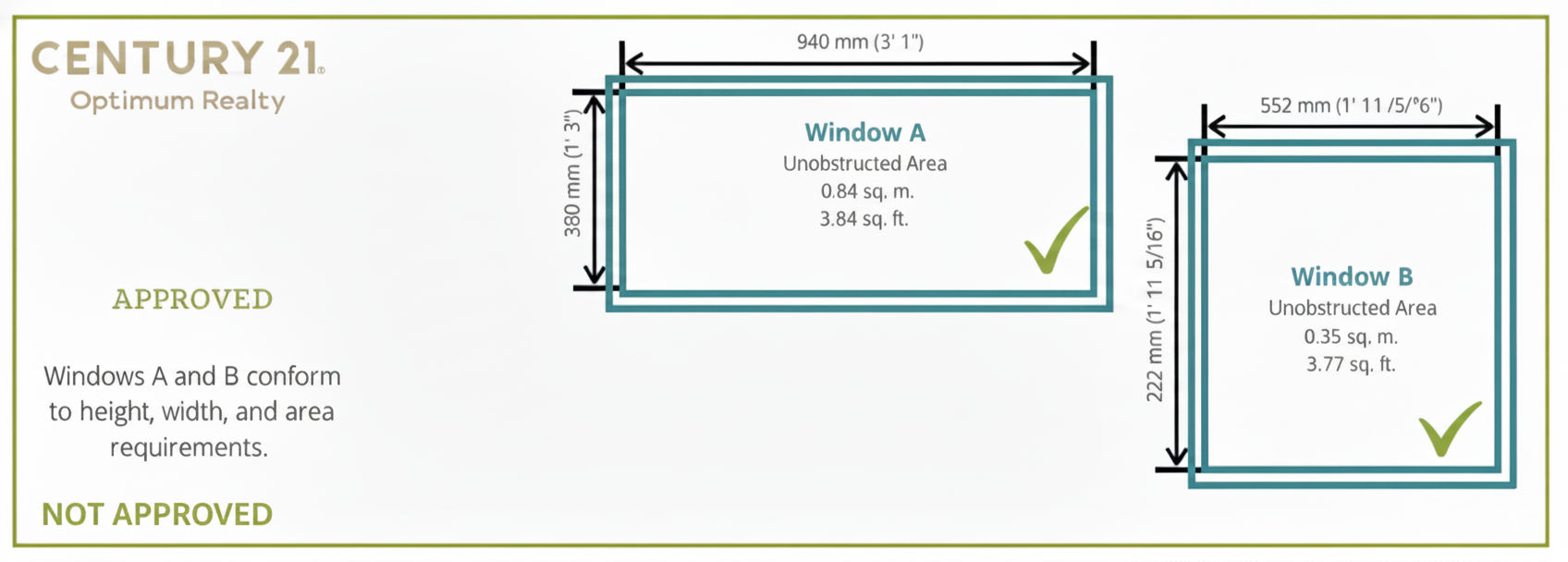
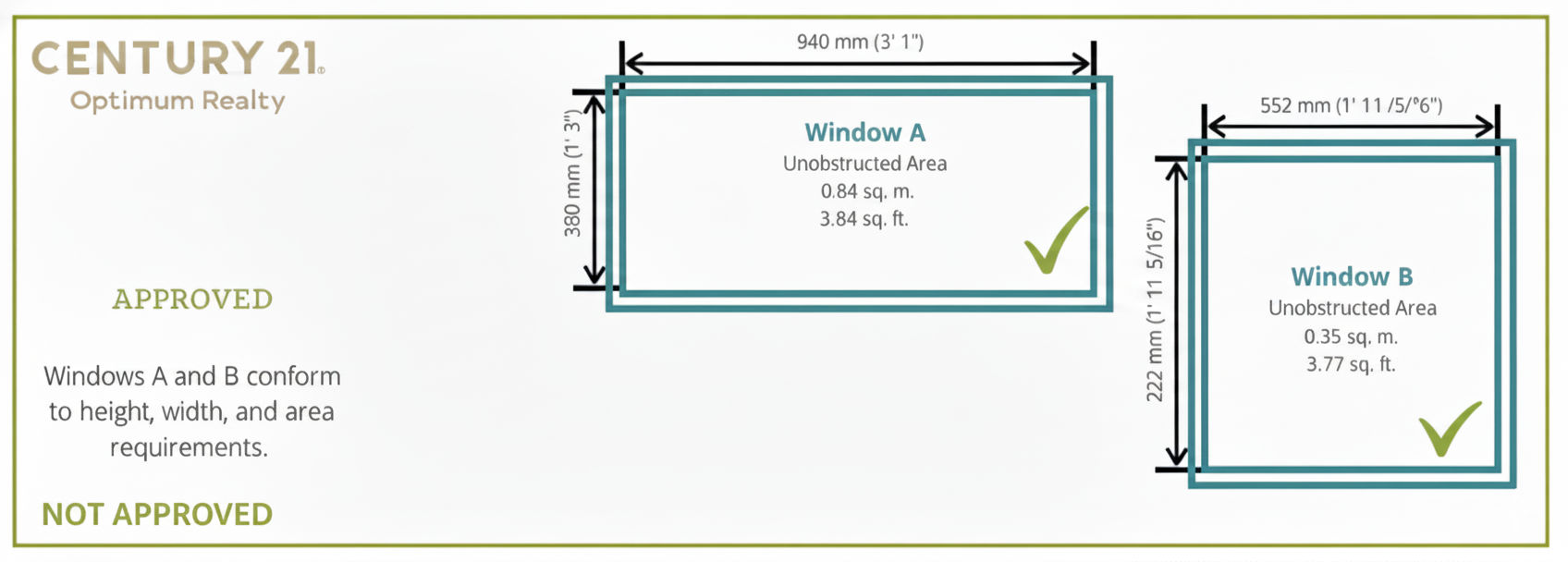
Basic Requirements: Each bedroom must have at least one egress window or a door leading directly outside. The window must provide an unobstructed opening of at least 0.35 square meters (3.77 square feet), with no single dimension measuring less than 380 millimeters (15 inches).
It's important to note that a window measuring exactly 380 mm by 380 mm does not satisfy the minimum area requirement. While this configuration meets the dimensional minimums, the resulting 0.14 square meter opening falls short of the required 0.35 square meters. In practice, you'll need larger dimensions—such as 500 mm by 700 mm or similar configurations—to achieve code compliance.
Multi-Story and Suite Considerations: For bedrooms located above or below another suite, or requiring occupants to travel more than one story to reach an exit, enhanced requirements apply. These situations demand windows with a minimum height of 1 meter, a width of at least 550 millimeters, and sills positioned no higher than 1 meter above the floor. These stricter standards ensure occupants can quickly access the window opening during emergencies.
Window Well Requirements for Basement Bedrooms
Basement bedrooms present unique challenges for egress compliance, as windows often open into below-grade window wells. Nova Scotia's building code addresses these situations with specific clearance requirements.
The window well must provide at least 760 millimeters (30 inches) of clearance directly in front of the egress window. This space must remain unobstructed when the window is fully open, allowing occupants to exit without restriction. For out-swinging windows, the well must extend at least 760 mm beyond the window's fully opened position.
If you install a protective grate or cover over the window well, it must be openable from inside without keys, tools, or specialized knowledge. This requirement ensures that anyone, including children or visitors unfamiliar with the home, can escape during an emergency.
Requirements for Older Homes and Renovations
Nova Scotia generally applies "grandfathering" principles to existing homes, meaning properties built before current codes took effect aren't automatically required to upgrade. However, this protection has important limitations.
When you renovate or upgrade a bedroom—including replacing windows—you trigger the requirement to bring that space into compliance with current egress standards. Similarly, converting a non-bedroom space into a bedroom or changing how a room is used necessitates meeting the latest code requirements.
This distinction matters significantly for homeowners and buyers. An older home with non-compliant bedroom windows may be perfectly legal as-is, but attempting to replace those windows or finish a basement bedroom will require full code compliance. Rooms that don't meet egress standards cannot legally be marketed or used as bedrooms, potentially affecting property values and usability.
Insurance Implications of Egress Window Compliance
Home insurance companies in Nova Scotia take egress window compliance seriously when underwriting policies for properties with finished basements or multiple bedrooms. Most insurers require these spaces to meet current local building codes as a condition of coverage.
Non-compliant egress windows can create significant complications if you need to file claims involving fire, injury, or occupant safety issues. Insurance adjusters may deny or reduce claims if investigations reveal code violations contributed to damages or injuries. This risk extends particularly to rental properties and converted spaces, where insurers scrutinize compliance more carefully.
For homeowners with rental units or considering basement conversions, verifying egress compliance before listing or occupying the space can prevent coverage gaps and potential liability. Many insurance providers view up-to-code egress installations favorably and may offer better rates for fully compliant properties.
Best Window Types for Egress Compliance
Not all window styles easily meet Nova Scotia's egress requirements. Understanding which types work best can save time and money during renovation projects.
Casement Windows: These side-hinged windows that swing outward like doors are often the preferred choice for egress applications. When fully opened, casement windows provide an unobstructed opening that typically meets or exceeds minimum area requirements. Their operation is intuitive, requiring no special knowledge to open during emergencies.
Horizontal and Vertical Sliding Windows: Certain slider configurations can meet egress standards, though careful sizing is essential. These windows must provide the full 0.35 square meter opening when slid completely open, which may require larger overall frame sizes compared to casement windows.
Windows to Avoid: Double-hung windows, awning windows with limited opening angles, and fixed windows rarely meet egress requirements without impractical sizing. Hopper windows that open inward can also create accessibility problems in window wells.
When selecting egress windows, work with suppliers familiar with Nova Scotia's building codes. They can help you choose appropriately sized products that meet both dimensional and area requirements while fitting your home's aesthetic.
Compliance Checklist for Nova Scotia Homeowners
Before starting any bedroom renovation or window replacement project, consider these steps:
- Verify Current Use: Determine whether the room is currently used as a bedroom or will be after renovation, as this affects code requirements.
- Measure Carefully: Calculate both the total opening area and each dimension to ensure compliance with minimum standards.
- Assess Window Well Needs: For basement applications, plan adequate clearance and ensure covers can be opened from inside without tools.
- Consult Building Authorities: Contact your local building department for official guidance specific to your municipality and property situation.
- Document Compliance: Keep records of permits, inspections, and installations for insurance purposes and future property sales.
- Review Insurance Coverage: Notify your insurance provider of bedroom additions or conversions to ensure adequate coverage.
Key Requirements Summary
| Requirement | Minimum Value | Notes |
|---|---|---|
| Open area | 0.35 m² (3.77 sq. ft.) | No dimension less than 380 mm (15") |
| Window well clearance | 760 mm (30") | Applies to basement windows |
| Window operation | No keys/tools/special knowledge | Must be openable from inside |
| Preferred types | Casement, sliders | Check sizing for compliance |
| Older homes | Must upgrade if renovated | Changing bedroom use triggers update |
Protecting Your Investment and Your Family
Egress window compliance in Nova Scotia represents more than bureaucratic box-checking. These requirements reflect decades of fire safety research and real-world emergency response experience. Properly installed egress windows provide peace of mind that your family can escape safely during the unthinkable.
For homeowners planning renovations, the upfront investment in code-compliant egress windows protects against future legal complications, insurance denials, and reduced property values. For buyers, verifying egress compliance should be part of any home inspection, particularly for properties with finished basements or multiple bedrooms.
The building code changes effective April 1, 2025, ensure Nova Scotia homes meet contemporary safety standards. By understanding and implementing these requirements, you contribute to safer communities while protecting your most valuable asset—your home.
Before proceeding with any egress window installation or bedroom renovation, always consult with your local building department for official guidance specific to your property and municipality. Building officials can provide clarification on code interpretation, permitting requirements, and inspection procedures to ensure your project meets all applicable standards.
This guide provides general information about egress window requirements in Nova Scotia based on building code standards effective April 1, 2025. Requirements may vary by municipality, and property-specific circumstances may necessitate additional considerations. Always verify current requirements with local building authorities before beginning renovation projects.